A tack sharp photo is one where the main subject is perfectly focused and detailed, with no blur. Crisp edges make a photo look sharp, while soft edges make it look blurry. Many factors contribute to sharpness.
Sharpness is a combination of factors, not just one setting or technique. You can refer to these guides for more in depth information on how to achieve tack sharp images.
Tips for tack sharp images
This section offers valuable recommendations to consider.
Firmware Update
- Verify your camera’s firmware version and update it to the latest version if necessary.
This can help resolve any software-related issues affecting image sharpness
Focus accurately
- Autofocus Mode: Autofocus (AF) is the function of a camera to automatically focus on a subject
- Single shot (AF-S): Locks in the focus once complete and useful for motionless subjects.
- Continuous mode (AF-C): The camera continues to focus while the shutter button is pressed and held halfway down. Great when the subject is in motion.
- Hybrid (AF-A): When the shutter is pressed halfway down, this mode locks the focus if the subject is motionless or continues to focus if the subject is in motion.
- Manual Focus (MF): Is the function to let the photographer adjust the focus manually instead of the camera. For static subjects or macro photography, manual focus can provide more control.
- Auto focus area modes - sets the type of focusing frame when using auto focus.
- Center Fix: Focuses on the subject in the center of screen.
- Wide: Focuses on a range, displaying a green frame around the area.
- Zone: Select a zone on the monitor on which to focus and the camera will select the focus area.
- Spot: If the camera can't focus on a selected point, it uses focus points around the spot as a secondary area for focusing.
- Focus Peaking (if available): This highlights the in-focus areas in your viewfinder or screen. Peaking makes it easier to identify the in-focus area by marking that area in color.
- Focus Point Selection: Carefully select the specific point you want in focus. Don't just rely on the center point.
- Back-Button Focus: Many cameras allow you to separate the focus function from the shutter button. This can be helpful for maintaining focus on a moving subject or for recomposing your shot after focusing.
- Animal and Eye focus features: Many cameras have the capability to provide exceptional focus points based on the eyes of both humans and animals.
Stabilize your camera
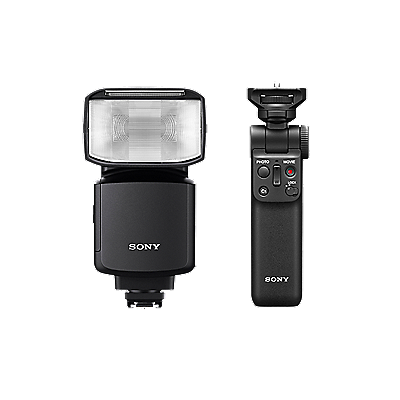
- Use a tripod and remote shooting capabilities
- With good settings and focus techniques, a tripod significantly reduces camera shake and provides pathway to more stable focusing.
- This is highly recommended when shooting at lower shutter speeds.
- To eliminate most shake mechanisms while shooting, use a tripod along with a remote shooting mechanism for completely hands-free photography.
- The Steadyshot® feature provides excellent technical aspects to decrease camera shake during shooting.
- Sony cameras, depending on the model, have Standard and Active Steadyshot functions available.
- Use a Remote Shutter Release or Self-Timer: This prevents camera movement when pressing the shutter button.
Optimize Shutter Speed
If you get motion blurr in your images increase the shutter speed if the subject is moving.
- Fast Shutter Speed: A faster shutter speed (e.g., 1/500s or faster) freezes motion and minimizes blur.
- Shutter Speed: A fast enough shutter speed is essential to freeze motion.
- Reciprocal rule: A general guideline is to use a shutter speed at least equal to the reciprocal of your lens's focal length. For example, if you're using a 200mm lens, aim for a shutter speed of at least 1/200th of a second. This is just a starting point, and you may need a faster speed for moving subjects.
Use the right Aperture
- Avoid Wide Open Apertures: Lenses are often sharpest 2-3 stops down from their widest aperture (e.g., f/5.6–f/8).
- Avoid Very Narrow Apertures: Extremely small apertures (e.g., f/22) can cause diffraction, reducing sharpness.
- Aperture: While aperture primarily controls depth of field, it can indirectly affect sharpness.
Set the right ISO
- Since ISO measures the camera sensor's sensitivity to light, a higher ISO setting will capture more light, but introduce digital noise, which can reduce the sharpness of the image.
- For tack sharp images, it's best to use a combination of the lowest ISO setting possible together with a faster shutter speed and a good aperture setting.
- Use the Lowest ISO possible: Higher ISO settings can introduce noise, which reduces perceived sharpness.
Pay attention to Depth of Field
- For portraits: Focus on the eyes to make them sharp.
- For landscapes: Use a small aperture (e.g., f/11–f/16) and focus using the hyperfocal distance to maximize sharpness throughout the scene.
Lighting and Contrast
- Use good lighting: Proper lighting enhances details and sharpness.
- Use a Lens Hood: This reduces lens flare, which can soften images.
Use Live View when applicable for tack sharp photos
- Live View (found on many newer cameras) provides focus and composition features on a larger screen as opposed to a viewfinder.
- While slower, using Live View can help with accurate focus and viewing more details over the viewfinder.
Post-Processing
- Sharpening in post-processing can enhance the appearance of sharpness, but it can't fix a blurry image. Over-sharpening can produce undesirable effects, so it is important to use this technique with caution.
- Use Noise Reduction carefully to avoid losing fine details.