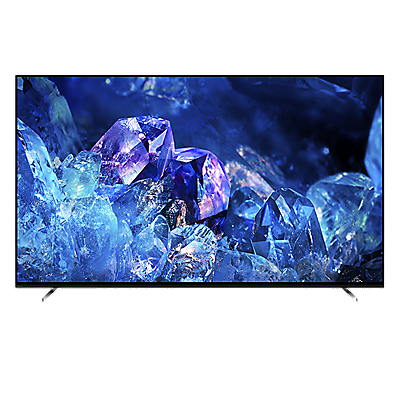








The Wi-Fi® signal on your TV may drop or intermittently disconnect for various reasons. This article provides information and troubleshooting steps to help resolve the problem.
Note: While we can't recommend any specific provider, installing and running an internet speed test app may help to identify the issue.
Before you start
It's recommended that you keep your TV software updated to the latest version. These updates include key features, applications, bug fixes, and feature improvements. Your TV may receive these updates automatically. Check the article Perform a software update on an Android TV™ or Google TV™ for additional information.
Power reset or restart your TV and your modem/router
If the Wi-Fi signal on your TV device drops or intermittently disconnects, try a power restart or reset of your TV and your modem/router first. A power cycle or reset of your devices often improves or resolves Wi-Fi connectivity issues. Then, check your network connection status and the troubleshooting steps provided if needed.
- Power reset your modem/router: Disconnect the power to your modem/router for at least one minute, then reconnect the power and wait for your modem/router to complete its connection to the internet. This procedure doesn't change any settings stored in the router. If you need specific information and instructions, check your modem/router manual.
Check your TV Network Status
If you continue to experience Wi-Fi® connection issues after resetting your devices, check the network status of your TV. The Network Settings icon or messages on the TV menu screen indicate your network connection status. How it appears varies depending on the model year of your TV and the Android™ OS version installed. Choose the applicable steps based on your model year.
Check the network status on your TV, and then, if necessary, follow the suggested steps in the troubleshooting section provided.
General Troubleshooting
- The Wi-Fi signal strength is weak
Place the router close to your TV, then check if the signal strength has improved. - Your TV is too close to the router.
It is recommended that the TV and router be at least 1 meter (3 feet) apart. - Other devices are connected to the same network
The network speed may slow if other devices download large-sized files, such as videos. Cancel or wait until this activity is completed and try again. - Your modem/router is not connected to the internet
- Make sure the internet cable going to your modem is securely connected.
- If you have a separate router, make sure the cable going from the modem to the router is securely connected.
- Disconnect power from the modem/router for about 60 seconds, then reconnect power and make sure it's turned on.
- Wait until your modem/router has time to connect to the internet.
- Check for an internet connection on other devices (smartphone, tablet, computer, etc.); if you don't have internet, contact your provider for assistance.
- Interference from other wireless devices
- If multiple wireless devices or electric equipment, such as microwave ovens, are used at home, it may affect the Wi-Fi performance of your TV. Power off these devices when not in use, or keep them away from your TV.
- Electromagnetic interference may also occur depending on the location of the TV. If possible, change its location and check if the performance improves.
Devices that may Cause Electromagnetic Interference Environments that may Cause Electromagnetic Interference - Microwave ovens
- Cordless phones
- Garage door openers
- Wireless toys
- Locations near large transmission lines
- Locations that generate static electricity
- Locations where the walls, decks, or doors have metal surfaces
- Check the frequency band setting of your router (for dual-band routers)
Depending on your Wi-Fi router, the 2.4GHz, 5GHz, or 6GHz frequencies may be available. If 5GHz or 6GHz frequency bands are available, we recommend using one of those frequencies. (The availability of 6GHz depends on the country) - You also have a network (ethernet) cable connected to your TV
When using Wi-Fi, try disconnecting the network cable from your modem/router to your TV. - The Internet Protocol for your router is set for IPv6
If your router is set for IPv6, try turning off this setting. Refer to your router documentation and the manufacturer for information if needed. - Check the IP Control setting on your TV; if it's off, try setting it to on.
Product Repair
Repair information and service assistance
Community
Here you can ask questions and connect with other Sony users
Parts & Accessories
Product information and sales assistance
Register a Product
Keep track of all your products in one location
Contact Support
Product support & customer relations
Support by Sony (Mobile App)
Get Support Content on the Go!

